Office Address
515 Delaware Street SE
Minneapolis, MN 55455
United States
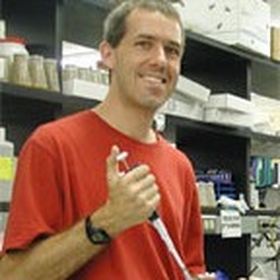
Thomas
Neufeld, Ph.D.
Professor
Genetics, Cell Biology and Development
Research interests
The Neufeld lab is interested in the basic mechanisms of cell growth control. They use the fruit fly Drosophila as a model system to investigate signaling pathways and cellular functions that regulate growth. The goal of their research is to understand how signals that control cell growth, such as nutrient conditions and growth factors, are connected to growth-promoting cellular processes such as nutrient uptake and biosynthesis.
They focus on the target of rapamycin (TOR) protein kinases, which are central regulators of cell growth whose function is conserved from yeast to plants to mammals. TOR activity is controlled by nutrient levels, cellular energy state, and growth factors such as insulin, and in turn TOR controls multiple cellular functions critical for growth. Inappropriate activation of TOR signaling underlies a number of growth-related genetic diseases including cancer. In the lab, the approach is to identify mutations in genes involved in TOR signaling, and to characterize their function using multiple cellular and genetic assays.
A second, related area of the lab's research centers on the degradative process known as autophagy. This process, which is controlled by the TOR pathway and induced by starvation, involves the non-selective engulfment and degradation of cytoplasm within the lysosome. Through autophagy, macromolecules and entire organelles are recycled into amino acids, lipids, and other simple molecules, thus supplying the cell with an internal source of nutrients under starvation conditions. Although autophagy has been understood morphologically for many years, the past decade has seen a new surge of interest in autophagy due to the recent discovery of approximately 20 “ATG” genes that regulate autophagy, and to the discovery that defects in autophagy are involved in aging, neurodegeneration, and cancer. The lab hopes to use the genetic tools available in Drosophila to define the functions and regulation of autophagy.
Selected publications
Pan X, Neufeld TP, O'Connor MB. 2019. A Tissue- and Temporal-Specific Autophagic Switch Controls Drosophila Pre-metamorphic Nutritional Checkpoints. Current Biology 29(17):2840-51
Ayala CI, Kim J, Neufeld TP. 2018. Rab6 promotes insulin receptor and cathepsin trafficking to regulate autophagy induction and activity in Drosophila. J Cell Sci. 131(17) jcs216127.
Kim J, Bilder D, Neufeld TP. 2018. Mechanical stress regulates insulin sensitivity through integrin-dependent control of insulin receptor localization. Genes & Development, 32(2):156-164.
Søreng K, Neufeld TP, Simonsen A. 2018. Membrane Trafficking in Autophagy. International Review of Cell and Molecular Biology, 336:1-92.
Neisch AL, Neufeld TP, Hays TS. 2017. A STRIPAK complex mediates axonal transport of autophagosomes and dense core vesicles through PP2A regulation. The Journal of Cell Biology, 216(2):441-461.
Mauvezin C, Neufeld TP. 2017. Autophagosomes take the Klp98-A train. Small GTPases, 8(1):16-19.
Braden CR, Neufeld TP. 2016. Atg1-independent induction of autophagy by the Drosophila Ulk3 homolog, ADUK. The FEBS Journal, 283(21):3889-3897.
Mauvezin C, Neisch AL, Ayala CI, Kim J, Beltrame A, Braden CR, Gardner MK, Hays TS, Neufeld TP. 2016. Coordination of autophagosome-lysosome fusion and transport by a Klp98A-Rab14 complex in Drosophila. Journal of Cell Science, 129(5):971-82.
Mauvezin C, Ayala CI, Neisch AL, Kim J, Beltrame A, Braden CR, Gardner MK, Hays TS, Neufeld TP. 2016. Coordination of autophagosome-lysosome fusion and transport by a Klp98A-Rab14 complex. Journal of Cell Science. 129(5):971-82.
Kim J, Neufeld TP. 2015. Dietary sugar promotes systemic TOR activation in Drosophila through AKH-dependent selective secretion of Dilp3. Nature Communications 6:6846.
Mauvezin C, Nagy P, Juhász G, Neufeld TP. 2015. Autophagosome-lysosome fusion is independent of V-ATPase-mediated acidification. Nature Communications 6:7007.
Mauvezin C, Ayala C, Braden CR, Kim J, Neufeld TP. 2014. Assays to monitor autophagy in Drosophila. Methods 68(1):134-9.
Russell RC, Tian Y, Yuan H, Chang YY, Kim J, Kim H, Neufeld TP, Dillin A, Guan KL. 2013. ULK1 promotes autophagy by phosphorylating Beclin-1 and activating Vps34 lipid kinase. Nature Cell Biology, 15(7):741-50.
Jimenez-Sanchez M, Menzies FM, Chang YY, Simecek N, Neufeld TP, Rubinsztein DC. 2012. The Hedgehog signaling pathway regulates autophagy. Nature Communications, 3:1200.
Li L, Kim E, Yuan H, Inoki K, Goraksha-Hicks P, Schiesher RL, Neufeld TP, Guan KL. 2010. Regulation of mTORC1 by the rab and ARF GTPases. Journal of Biological Chemistry, 285(26):19705-9.
Chang YY, Neufeld TP. 2009. An Atg1/Atg13 complex with multiple roles in TOR-mediated autophagy regulation. Molecular Biology of the Cell, 20(7): 2004-14.
Kim E, Goraksha-Hicks P, Neufeld TP, Guan KL. 2008. Regulation of TORC1 by Rag GTPases in nutrient response. Nature Cell Biology, 10(8): 935-45.
Juhász G, Hill JH, Yan Y, Sass M, Baehrecke EH, Backer JM, Neufeld TP. 2008. The class III PI(3)K Vps34 promotes autophagy and endocytosis but not TOR signaling in Drosophila. Journal of Cell Biology, 181(4): 655-66.
Juhász G, Erdi B, Sass M, Neufeld TP. 2007. Atg7-dependent autophagy promotes neuronal health, stress tolerance, and longevity but is dispensable for metamorphosis in Drosophila. Genes & Development, 21(23): 3061-6.
Hennig KM, Colombani J, Neufeld TP. 2006. TOR coordinates bulk and targeted endocytosis in the Drosophila melanogaster fat body to regulate cell growth. Journal of Cell Biology 173(6): 963-974.