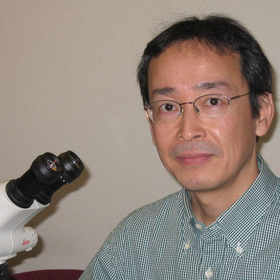
Office Address
515 Delaware Street SE
Minneapolis, MN 55455
United States
Hiroshi
Nakato, Ph.D.
Professor; Director, Developmental Biology Center
Genetics, Cell Biology and Development
Research statement
The long-term goal of our research is to address fundamental questions in stem cell biology: how quantity, quality, and activity of stem cells are precisely controlled in vivo. Stem cells are defined by their unique potential to self-renew and to differentiate into mature cell types, which support normal development and maintain tissue homeostasis. Stem cells typically reside in specialized microenvironments called ‘niches’ that support their ability to self-renew and to retain the characteristics of a stem cell. The niche is usually composed of supporting niche cells, extracellular substrates, and signaling molecules that control stem cell activity. For the future advancement of regenerative medicine and the development of novel cancer therapies, it is critical to understand the molecular basis underlying stem cell control by the niche. To understand fundamental principles of stem cell regulation in the extracellular environment, we focus on the role of heparan sulfate proteoglycans (HSPGs) in stem cell control using the genetically tractable model organism Drosophila. HSPGs are a special type of carbohydrate-modified proteins that play an essential role in signaling and distribution of various growth factors, including (but not limited to) bone morphogenetic proteins, Wnt/Wingless, and Hedgehog. Genetic studies of Drosophila stem cells, with sophisticated cell lineage tracing techniques, have helped define basic principles of stem cell biology. Using powerful Drosophila stem cell model systems, we seek to elucidate the cellular and molecular basis for poorly understood stem cell behaviors, including stem cell competition, replacement, and tissue regeneration.
Selected publications
Nakato, E., Baker, S., Kinoshita-Toyoda, A., Knudsen, C., Lu, Y.-S., Takemura, M., Toyoda, H., and Nakato, H. (2024) In vivo activities of heparan sulfate differentially modified by NDSTs during development. Proteoglycan Research 2(1):e17.
Nakato, E., Kamimura, K., Knudsen, C., Masutani, S., Takemura, M., Hayashi, Y., Akiyama, T., and Nakato, H. (2024) Differential heparan sulfate-dependency of the Drosophila glypicans. J. Biol. Chem. 300(1) 105544.
Knudsen, C.*, Koh, W.S.*, Izumikawa, T., Nakato, E., Akiyama, T., Kinoshita-Toyoda, A., Haugstad, G., Yu, G., Toyoda, H., and Nakato, H. (2023) Chondroitin sulfate is required for follicle epithelial integrity and organ shape maintenance in Drosophila. *These authors contributed equally. Development 150(17):dev201717.
Koh, W.S.*, Knudsen, C.*, Izumikawa, T., Nakato, E., Grandt, K., Kinoshita-Toyoda, A., Toyoda, H., and Nakato, H. (2023) Regulation of morphogen pathways by a Drosophila chondroitin sulfate proteoglycan Windpipe. *These authors contributed equally. J. Cell Sci. 136(7):jcs260525.
Ten Hagen, K.G., Nakato, H., Tiemeyer, M. and Esko, J.D. (2022) Chapter 26, Arthropoda in "Essentials of Glycobiology" (4th edition. Cold Spring Harbor (NY): Cold Spring Harbor Laboratory Press
Nakato, E., Bowden, N., and Nakato, H. (2022) Generation of Drosophila heparan sulfate mutant cell lines from existing fly strains. Methods Mol. Biol. 2303:627-636. (Eds. by Balagurunathan, K., Nakato, H., Saijoh, Y., and Desai, U., Springer New York)
Bowden, N., Takemura, M. and Nakato, H. (2022) Molecular genetic techniques for the proteoglycan functions in Drosophila. Methods Mol. Biol. 2303:405-414. (Eds. by Balagurunathan, K., Nakato, H., Saijo, Y., and Desai, U., Springer New York)
Bowden, N. and Nakato, H. (2021) Heparan Sulfate Proteoglycans in the Stem Cell Niche: Lessons from Drosophila. Proteoglycans in stem cells: From development to cancer, Biology of Extracellular Matrix 9, 1-19. (Eds. by Götte, M. and Forsberg-Nilsson, K., Springer Nature)
Takemura, M., Lu, Y.-S., Nakato, E., and Nakato, H. (2021) Endogenous epitope tagging of a JAK/STAT ligand Unpaired1 in Drosophila. MicroPubl. Biol. 10.17912/micropub.biology.000387.
Takemura, M.*, Bowden, N.*, Lu, Y.-S., Nakato, E., O’Connor, M.B., and Nakato, H. (2021) Drosophila MOV10 regulates the termination of midgut regeneration. *These authors contributed equally. Genetics 218(1):iyab031.
Takemura, M., Noborn, F., Nilsson, J., Bowden, N., Nakato, E., Baker, S., Su, T.-Y., Larson, G., and Nakato, H. (2020) Chondroitin sulfate proteoglycan Windpipe modulates Hedgehog signaling in Drosophila. Mol. Biol. Cell 31, 813-824.
Nakato, E., Liu, X., Eriksson, I., Yamamoto, M., Kinoshita-Toyoda, A., Toyoda, H., Kjellén, L., Li, J-P., and Nakato, H. (2019) Establishment and characterization of Drosophila cell lines mutant for heparan sulfate modifying enzymes. Glycobiology 29, 479–489.
Su, T.Y., Nakato, E., Choi, P.Y., and Nakato, H. (2018) Drosophila glypicans regulate follicle stem cell maintenance and niche competition. Genetics 209, 537-549.
Kanai, M.I., Kim, M-J. Akiyama, T., Takemura, M., Wharton, K., O'Connor, M.B. and Nakato, H. (2018) Regulation of neuroblast proliferation by surface glia in the Drosophila larval brain. Sci. Reports 8, 3730.
Levings, D. and Nakato, H. (2018) Loss of heparan sulfate in the niche leads to tumor-like germ cell growth in the Drosophila testis. Glycobiology 28, 32-41.
Tiemeyer, M., Nakato, H. and Esko, J.D. (2017) Chapter 26, Arthropoda in "Essentials of Glycobiology" (3rd edition. Cold Spring Harbor (NY): Cold Spring Harbor Laboratory Press; 2015-2017. Chapter 26.)
Takemura, M. and Nakato, H. (2017) Drosophila Sulf1 is required for the termination of intestinal stem cell division during regeneration. J. Cell Sci. 130, 332-343.
Nakato, H. and Li, J-P. (2016) Functions of heparan sulfate proteoglycans in development: insights from Drosophila models. Int. Rev. Cell Mol. Biol. 325, 275-293.
Levings, D., Arashiro, T. and Nakato, H. (2016) Heparan sulfate regulates the number and centrosome positioning of Drosophila male germline stem cells. Mol. Biol. Cell 27, 888-896.